
How to Get Starfish in Grow a Garden — Complete 2026 Guide
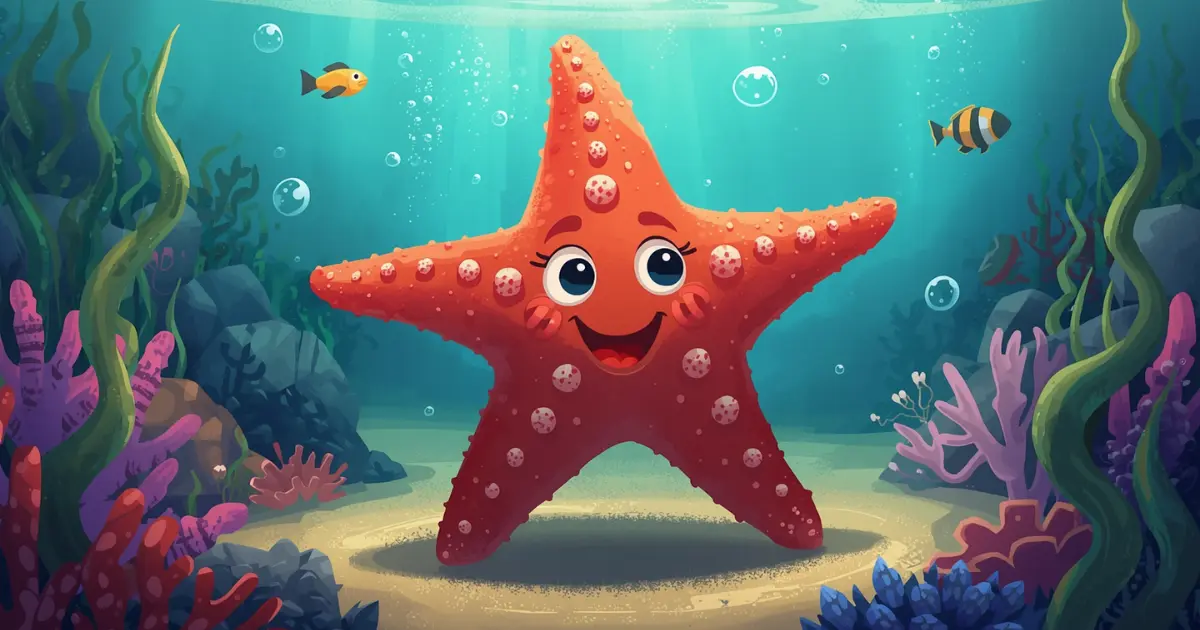
If you’ve spent any real time in Grow a Garden, you’ve probably noticed that some players just progress at a completely different pace. They’re stacking pet slots, expanding their inventory, and breezing through level gates while newer players are still grinding the basics. More often than not, there’s one specific pet behind that kind of speed — a five-armed, coral-pink Summer Update addition called the Starfish.
On the surface, it sounds underwhelming. Common rarity, low trade value, slow movement speed. But once you understand what it actually does and how the community uses it, you’ll realize the Starfish is one of the most strategically important pets you can have in your collection — particularly in the early-to-mid stages of account progression.
This guide covers every angle: how to get it, what it does, whether it shares XP, what Rainbow and Inverted mutations do to it, and exactly how to squeeze the most out of one of Grow a Garden’s most quietly powerful pets.
What Egg Is Starfish in — Grow a Garden?
The Starfish hatches from one specific egg: the Common Summer Egg. This egg was added to the Pet Eggs Shop as part of the Summer Update alongside two other Summer eggs, but the Common version is the most accessible and the one most players start with.
Inside the Common Summer Egg, there are exactly three possible pets: the Starfish, the Seagull, and the Crab. The hatch probabilities break down cleanly — the Starfish holds a full 50% chance, while both the Seagull and the Crab sit at 25% each. Statistically, every second Common Summer Egg you open should produce a Starfish on average.
The egg costs exactly one million Sheckles and rotates through the Pet Eggs Shop at a 35% spawn rate per refresh cycle. The shop restocks every 30 minutes, so if the Common Summer Egg isn’t available when you check in, just set a timer and revisit. There’s no need to buy from other players at a markup when patience gets you the same result at base price.
How Rare Is a Starfish in Grow a Garden?
The Starfish is classified as Common rarity — the lowest tier in the Grow a Garden pet system. This was a deliberate design choice. The Summer Update introduced several new pets across different rarity levels, and the Starfish was specifically built to be the one that every player can realistically obtain without relying on luck, spending real money, or grinding for weeks.
In the player-to-player trading economy, the Starfish carries a value of around 2 tokens with low demand from the broader community. This makes sense: because any player can hatch one themselves by saving up a million Sheckles, there’s no scarcity driving high trade value. Nobody’s offering rare pets for a base Starfish when they can just go to the shop.
But dismissing the Starfish because of its Common label is a mistake a lot of newer players make. Rarity is a measure of how hard something is to get — it’s not a direct measure of how useful something is. The Starfish is extremely easy to get, and extremely good at one specific, important thing. Those two facts don’t cancel each other out.
What Does Starfish Do in Grow a Garden?
The Starfish has one ability. It’s called “You’re a Star” and the function is exactly what you’d hope from a name like that: it passively generates bonus XP for itself every second it’s deployed on your farm.
At Level 1, the passive kicks out roughly ~6 XP per second on top of the standard XP that all pets accumulate naturally over time. That works out to around 360 XP per minute, 3,600 per ten minutes, and over 21,000 per hour — all without any active input from you. As the Starfish levels up, the per-second XP output increases progressively, meaning the pet becomes more efficient at its own job the longer you keep it running.
Zero-Hunger Passive — A Key Advantage
What separates the Starfish from other XP-focused pets isn’t just the rate — it’s the hunger independence. The “You’re a Star” passive keeps running even when the Starfish’s hunger bar has completely depleted. You can entirely skip feeding it and the XP still flows.
With a hunger bar of only 1,500 units (which is quite small by Grow a Garden standards), this matters practically. Other pets with XP-adjacent abilities might pause or slow down if they’re not fed. The Starfish just keeps going, making it the most low-effort XP engine available at Common rarity.
Does Starfish Give XP to Other Pets in Grow a Garden?
This is probably the most asked question about the Starfish, and the answer is a clear no — the Starfish does not grant any XP to other pets.
The “You’re a Star” ability is entirely self-directed. Every XP point generated by this passive goes toward the Starfish’s own level progression and nowhere else. Other pets on your farm — whether they’re right next to the Starfish or on the other side of your plot — level through their own separate sources and receive nothing from the Starfish’s ability.
This distinction is worth understanding before you plan your farm layout around it. If your goal is to level up multiple pets simultaneously, the Starfish isn’t the tool for that. But if your goal is to level the Starfish itself as fast as possible — which is exactly what the Starfish Method relies on — then the concentrated XP output is actually a benefit rather than a limitation.
Step-by-Step: How to Get Starfish in Grow a Garden
There are no hidden requirements, no limited-time event gates, and no luck-dependent drop tables outside the hatch itself. Getting a Starfish is a repeatable process anyone can follow:
-
1Accumulate 1,000,000 Sheckles
Farm crops, sell mutated produce, and grind your way to a million. This sounds daunting early on, but with decent plant mutations selling for meaningful Sheckle amounts, it comes together faster than it looks at first glance.
-
2Open the Pet Eggs Shop
Navigate to the Pet Eggs Shop in Grow a Garden and check the current available egg stock.
-
3Wait for the Common Summer Egg
The egg spawns at a 35% rate per shop refresh. Refreshes happen every 30 minutes. If it’s not there right now, don’t overpay a player in a trade — just come back at the next cycle and buy it at the standard one million Sheckles price.
-
4Purchase and Place the Egg
Spend your million Sheckles, collect the egg, and place it on your farm. The incubation period runs for approximately 20 minutes from the moment you place it down.
-
5Hatch and Equip
After 20 minutes, collect your pet. At 50% odds, there’s a strong chance it’s a Starfish. If you landed a Seagull or Crab instead, those are still solid Summer pets — but save up and run the process again if you specifically need the Starfish.
The Starfish Method — Why It Works
The “Starfish Method” is a player-coined progression strategy that spread organically through the community after the Summer Update, and it’s built around one simple insight: the fastest path to unlocking more pet slots and egg slots in Grow a Garden is to level a pet up quickly, age it up to the required threshold, and sacrifice it for the upgrade — then repeat.
The Starfish does step one (leveling up quickly) better than any other common pet in the game. Its passive XP runs around the clock without any feeding requirement, it levels itself at a rate that outpaces both the Brown Mouse and Grey Mouse that previously filled this role, and its Common rarity means you can hatch another one relatively easily once the first is spent.
More pet slots means more pets running simultaneously. More pets means more passive income, more mutation triggers, more farming output. The Starfish Method is essentially a way to accelerate the infrastructure phase of your account so you can get to the actually fun part — stacking mutations, farming rare crops, and building real Sheckle income — faster than the average player.
Rainbow Starfish in Grow a Garden — Is It Worth It?
When a pet hits Level 50 in Grow a Garden, it becomes eligible to receive a pet mutation — a permanent trait added to the pet that modifies or amplifies what it does. Among all the mutations the Starfish can receive, Rainbow sits at the top of the priority list.
The Rainbow mutation carries a 3.12% application chance, putting it in the rarer end of the mutation pool. What it delivers is a significant amplification of the Starfish’s core passive — “You’re a Star” gets meaningfully stronger, pushing the XP generation rate noticeably higher than the base version. A Rainbow Starfish levels itself at a pace that genuinely stands out even against other mutated Starfish.
Because of that 3.12% chance, Rainbow Starfish are not something most players casually stumble into. Players who land one either got fortunate during mutation or deliberately pursued it through repeated attempts. In the trading space, a Rainbow Starfish is one of the more legitimately desirable variants of this pet — it’s not a whale-level item, but it has real value among players who use the Starfish Method seriously.
Inverted Starfish in Grow a Garden — What Does It Do?
The Inverted mutation is where most serious Starfish users aim when they first start mutating — and for good reason. It lands at a 15.58% application chance, which is about five times more likely than Rainbow, while still delivering a genuinely strong effect for this particular pet.
What Inverted does is add a flat +30% XP gain per second permanently on top of whatever the Starfish was already generating. For a pet whose entire purpose is self-leveling through XP accumulation, that 30% compound increase adds up to a meaningful real-world difference across a gaming session. An Inverted Starfish working overnight or during a long AFK session generates noticeably more experience than the base version doing the same thing.
For players who want a strong-performing Starfish without having to chase a 3.12% mutation rate across multiple attempts, Inverted is the realistic target. It’s not as flashy as Rainbow, but it’s a legitimate performance upgrade that makes the Starfish Method work faster — which is ultimately the whole point.
Full Starfish Mutations Comparison Table
Once your Starfish hits Level 50, any of the following mutations can be applied. Here’s how they stack up from most to least useful specifically for the Starfish’s XP-focused role:
| Mutation | Chance | Effect | Synergy with Starfish |
|---|---|---|---|
| Rainbow | 3.12% | Major amplification of the “You’re a Star” passive | Excellent |
| Inverted | 15.58% | +30% XP per second added permanently | Excellent |
| Mega | 6.23% | +10–40 extra XP per second, hunger rate increases 20% | Strong |
| Tiny | 6.23% | Hunger slows by 20%, adds 5–30 bonus XP per second | Strong |
| Shiny | 31.15% | +15% XP per second — most common positive upgrade | Good |
| Golden | 6.23% | Enhances passive ability at a moderate level | Good |
| Windy | 9.35% | Triggers Windstruck mutation on nearby crops periodically | Off-Meta |
| Frozen | 9.35% | Applies Frozen mutation on nearby fruits occasionally | Off-Meta |
| IronSkin | 3.12% | 35–45% chance to recover fruit stolen by other players | Off-Meta |
| Tranquil | 3.12% | Applies Tranquil crop mutation every 25 minutes | Off-Meta |
Mutations like Windy, Frozen, Tranquil, and IronSkin aren’t weak in general — they just don’t complement what the Starfish is designed to do. If you land one of these, consider whether it’s worth rerolling based on how heavily you’re using the Starfish for its XP purpose.
Pro Tips for Using Starfish Efficiently
- Skip the feeding schedule entirely — the passive XP runs at zero hunger, so the Starfish produces full value whether you feed it or not. Save your feeding resources for pets that actually require it to perform.
- Hatch more than one if your budget allows. Multiple Starfish leveling simultaneously through their own individual passives dramatically compresses the time it takes to execute the Starfish Method at scale.
- Never overpay for a Starfish in a trade. The 50% hatch rate and 35% shop spawn rate mean you can reliably produce one yourself at the million Sheckle price point. Don’t let players charge you a premium for what you can hatch independently.
- Prioritize getting it to Level 50 and mutating it if you plan to keep one long-term. The gap between a base Starfish and an Inverted or Rainbow variant is significant enough to matter across extended grinding sessions.
- Plan the transition point. Once you have the pet and egg slots you need, the Starfish’s role in your farm diminishes. Have your next active pet ready — something crop-focused or income-generating — so you can switch without losing momentum.
- The Starfish is one of the slowest-moving pets in the game, so don’t expect it to keep up with you while exploring. This doesn’t impact its passive ability at all — just something to keep in mind visually.
Frequently Asked Questions
Final Thoughts
The Starfish is one of those pets that rewards players who understand how Grow a Garden’s progression actually works. On the surface it looks boring — Common rarity, low trade value, one simple ability. But that ability, running continuously without any feeding requirement, quietly does more for your account development than most players realize until they’ve tried it.
Use it to unlock your slot infrastructure faster than you would with any other common pet. Mutate it when it hits Level 50 and aim for Inverted or Rainbow if you’re committed to keeping it. Then move on to farming and income pets once the groundwork is laid.
Get the Common Summer Egg, place it, wait 20 minutes, and start the clock on faster progression.
2 thoughts on “How to Get Starfish in Grow a Garden (Complete Guide 2026)”